
Please be advised that the following topic is for informational purposes only and our firm does NOT handle property damage cases unless they are associated with a serious injury claim. If you need further assistance regarding this particular topic, you can contact your local Bar Association for a referral to an attorney who may be able to address your inquiry in more detail.
Determining whether your car is a total loss after a car accident can be confusing and stressful, especially if you’re dealing with injuries or other complications from the crash. Terms like “totaled car” and “total loss car appraisal” often come up in these situations, leaving vehicle owners wondering about their options. If “my car was totaled in an accident,” you might be asking yourself: Is it really beyond repair? Can it still be driven? What happens next with insurance?
The answer depends on several factors, including the extent of the damage, your insurance policy, and California state laws. Insurance companies, mechanics, and even bystanders might have differing opinions, but ultimately, it’s a financial calculation that decides the fate of your vehicle. As the owner, you may want a quick declaration of a total loss to move on and replace it, or you might prefer repairs due to sentimental value, custom modifications, or affordability.
At Sally Morin Personal Injury Lawyers, we frequently help clients navigate the legal side of car accidents involving totaled vehicles. Beyond just the car itself, a totaled car can impact your overall accident compensation claim, including medical bills, lost wages, and pain and suffering. In this comprehensive guide, we’ll break down everything you need to know about when insurance will total a car in California, what a totaled car looks like, how to handle the process, and why seeking legal guidance is crucial for maximizing your recovery.
Understanding When a Car Is Declared a Total Loss in California
From an insurance perspective, declaring a car a total loss is primarily a matter of economics. Insurers use the Total Loss Formula (TLF) to make this determination. Under California law, a vehicle is considered a total loss if the cost of repairs plus the salvage value equals or exceeds the vehicle’s Actual Cash Value (ACV) before the accident. This formula ensures that it’s not financially viable to repair the car.
The ACV represents the fair market value of your vehicle just before the crash, accounting for depreciation. It’s calculated based on several key factors:
- The vehicle’s age: Older cars depreciate faster, lowering their ACV.
- Mileage at the time of the crash: Higher mileage typically reduces value.
- Overall condition: Pre-existing wear and tear, maintenance history, and any prior damage are considered.
- Features and trim level: Standard vs. premium editions, optional upgrades like navigation systems or safety features, can influence the value.
Passenger vehicles like cars, trucks, vans, and SUVs lose value over time—often dramatically within the first few years. This can be disappointing for owners who’ve invested in upkeep or customizations. Unfortunately, the TLF and ACV calculations rarely account for minor personal touches unless they significantly enhance market value, such as a rebuilt engine or high-end aftermarket parts.
If your vehicle is financed or leased, the insurance payout will first go toward settling the outstanding balance with the lender. Any remaining funds would then go to you, but don’t count on a windfall—depreciation often leaves owners “upside down” on loans.
What About Vehicle Modifications and Sentimental Value?
Insurance appraisals focus on objective market data, not emotional attachments. Sentimental value, like family heirlooms or personal history with the car, isn’t factored in. Similarly, cosmetic modifications (e.g., custom paint jobs or audio systems) may not boost the ACV unless they appeal broadly to buyers and can be verified with receipts. Functional upgrades, however, like a new transmission or tires, might be included if they demonstrably increase the vehicle’s worth.
If you disagree with the insurer’s valuation during a total loss car appraisal, gather evidence such as recent service records, photos of modifications, and comparable vehicle listings from sites like Kelley Blue Book or local dealerships to negotiate a higher ACV.
Can You Negotiate a Total Loss Declaration in California?
Yes, negotiation is possible, but California laws set boundaries. Insurers must follow fair claims practices under the California Insurance Code, ensuring transparent and reasonable valuations. If you believe the ACV is undervalued, you can request an independent appraisal or provide counter-evidence. However, once the TLF threshold is met, the insurer is likely to stand firm. In cases of dispute, invoking the appraisal clause in your policy can lead to a neutral third-party evaluation.
Understanding Salvage Value and Its Impact
When a car is totaled, the insurer assigns a salvage value—the amount they could recover by selling the vehicle for parts or scrap. This plays a key role in the TLF. High-value components, like catalytic converters in hybrids or batteries in electric vehicles, can inflate salvage value due to demand and supply chain issues. Average scrap values range from $100 to $500, but premium parts can push it higher.
If you choose to keep the totaled car (owner-retained salvage), the salvage value is deducted from your settlement. You’ll need to obtain a salvage certificate from the California DMV and ensure the vehicle passes safety inspections before driving it again.
How Does a Totaled Car Impact My Accident Claim?
A totaled car doesn’t prevent you from pursuing compensation for injuries or other damages. In fact, it can strengthen your case by highlighting the accident’s severity. Whether repaired or totaled, hiring a car accident lawyer helps you avoid lowball offers from insurers. Your attorney can handle negotiations, calculate comprehensive damages (including medical expenses, lost income, and emotional distress), and ensure you receive fair compensation.
What Does a Totaled Car Look Like?
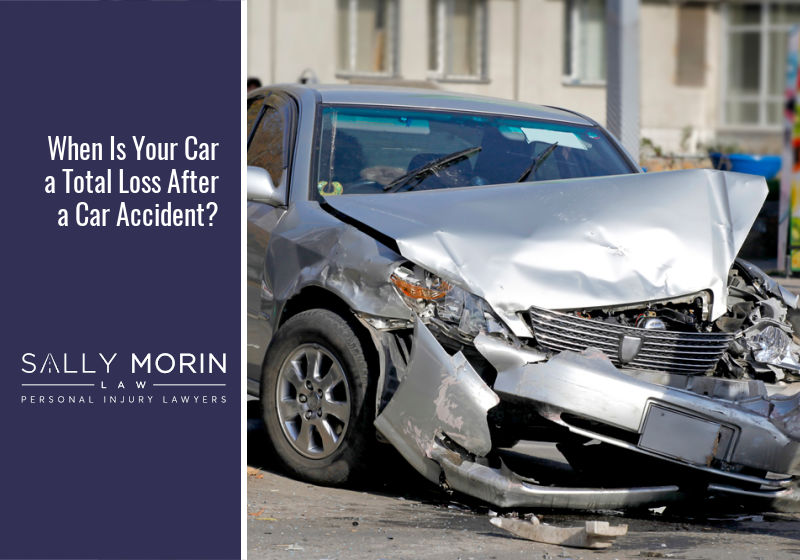
Not all totaled cars resemble a crumpled heap of metal. Sometimes, the damage is subtle or internal, making it hard to spot at first glance. Common visible signs include:
- A visibly bent or cracked frame.
- Damaged suspension components, leading to uneven stance or handling issues.
- Severely misaligned tires or wheels.
- Major fluid leaks (oil, coolant, or brake fluid) pooling under the vehicle.
- Deployed airbags and shattered glass throughout the interior.
- Inability to steer, brake, or accelerate properly.
- Extensive debris or missing parts, like a detached bumper or hood.
Hidden damage, such as electrical faults, compromised crumple zones, or engine compartment issues from a head-on collision, often tips the scale toward a total loss. Even if the car appears drivable, professional inspection is essential—driving an unsafe vehicle violates California Vehicle Code §24002 and could lead to fines or further accidents.
What to Do If Your Car Is Totaled in California
If “my car was totaled in an accident,” follow these steps to protect your rights:
- Ensure Safety and Document the Scene: Check for injuries, call 911, and take photos/videos of damage, the accident site, and all vehicles involved.
- Notify Your Insurance Company: Report the claim promptly. Provide details and request a detailed ACV explanation.
- Get an Independent Assessment: If unhappy with the insurer’s valuation, hire a licensed appraiser for a total loss car appraisal.
- Gather Evidence: Collect police reports, repair estimates, and comps to support negotiations.
- Explore Options: Decide on repair vs. total loss, or keeping the vehicle. Understand loan/lease implications.
- File with the DMV: Submit for a salvage certificate within 10 days of settling.
- Consult a Lawyer: For injury claims, get legal help to maximize compensation beyond just the car.
Watch Our Video: Understanding Total Loss After a Car Accident
For a visual explanation of the total loss process in California, including real-world examples and tips on dealing with insurance, check out this informative video from our team:
What Our Clients Say
Building trust is key when navigating accident claims. Here’s what some of our satisfied clients have shared:
“I was involved in a motorcycle accident where I sustained several injuries to my hand. Lauren at Sally Morin Law handled my case. I found her and her team to be awesome to work with. They were personable and responsive to any questions or concerns I had and made navigating a painful and stressful situation a lot easier. When it came time to settle, Lauren did an excellent job of getting me a settlement that I felt was sufficient to help me move on from the accident. I was happy with the outcome and I highly recommend this law firm.”
Read Eileen D.'s review of Sally Morin Personal Injury Lawyers on Yelp“We’d been in a car accident and were disoriented and flooded with paperwork. Lauren from Sally Morin talked to us and gave clear, well-reasoned advice. It was very calming to have guidance on the legal aspects as we were both recovering from health issues. She was quick to respond to follow-up questions and was always available. Highly recommend!”
Read Yuliya S.'s review of Sally Morin Personal Injury Lawyers on YelpProven Success: $525,000 California Car Accident Settlement
Our firm’s track record speaks for itself. In one case, a 34-year-old Bay Area woman was pinned in the backseat of a van after a high-speed rear-end collision in Pittsburg, California. She suffered severe leg injuries requiring multiple surgeries, skin grafting, and extensive rehabilitation, with medical bills approaching $1 million. The case involved multiple claimants sharing a $1,000,000 policy limit, complicating recovery.
Despite challenges like negotiating reduced medical bills and protecting her state benefits, Sally Morin Personal Injury Lawyers secured a $525,000 settlement, netting her over $321,000 after expenses. This outcome highlights our expertise in multi-party claims, bill advocacy, and maximizing client recovery even in complex scenarios.
Frequently Asked Questions About Total Loss After a Car Accident in California
Here are expanded answers to common questions about totaled cars:
Estimate Your Settlement with Our Free Tool
Wondering what your accident claim might be worth, including compensation for a totaled car? Use our general Settlement Calculator to get a preliminary estimate based on your injuries, medical costs, and other damages. This tool provides valuable insights to help you understand potential recovery—simply input your details for an instant overview.
Do I Have a Personal Injury Case?
The Importance of Legal Guidance in Your Car Accident Claim
Dealing with a totaled car after an accident is overwhelming, especially alongside injuries. A skilled California car accident lawyer can:
- Communicate with insurers on your behalf.
- Protect your rights during the claims process.
- Guide you through total loss appraisals and negotiations.
- Calculate all damages, including those beyond property loss.
- Secure a fair settlement to cover your full recovery.
When you’re wondering about your totaled car, contact the attorney team at Sally Morin Personal Injury Lawyers. We handle many areas of personal injury law, including car accidents with total vehicle loss. We believe you should be able to focus on recovering from your accident while we handle the legal details.
Take Action Now!
Don’t let insurance companies undervalue your totaled car or injury claim. Contact Sally Morin Personal Injury Lawyers today for expert guidance. Call Now: 877-380-8852 or schedule your Free Case Evaluation. We’re here to fight for the compensation you deserve—act now to protect your future!


