
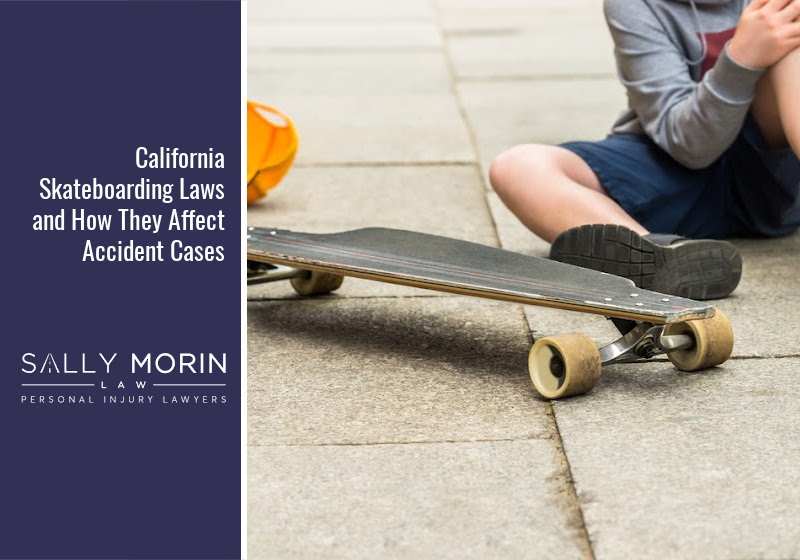
For many in California, a skateboard isn’t just for recreation—it’s a primary mode of transportation. From cruising down the boardwalk to commuting to work, skateboards are a common sight across the Golden State. But this popularity comes with a downside: a high number of skateboard accidents, often resulting in severe, life-altering injuries.
If you’ve been injured in a skateboarding accident, you may have the right to seek compensation, especially if someone else’s negligence caused your injuries. As long as you were following California’s skateboarding laws, you can file a personal injury claim against the at-fault party.
Navigating the legal landscape after an accident can be overwhelming. This guide will walk you through everything you need to know about California’s skateboarding laws, what to do if you’re in an accident, and how to protect your rights.
Please be advised that the following topic is for informational purposes only and not a legal matter currently handled by our firm. If you need further assistance regarding this particular topic, you can contact your local Bar Association for a referral to an attorney who may be able to address your inquiry in more detail.
Do I Have a Case?
Wondering if you have a valid personal injury case? Our online tool can help you get a preliminary assessment. Simply input the details of your accident, and the tool will provide you with information on whether you may have a claim. It’s fast, free, and confidential.
Do I Have a Personal Injury Case?
This assessment tool provides general guidance only and does not constitute legal advice. Case outcomes depend on many factors not covered in this brief assessment. For accurate evaluation of your specific situation, consult with a qualified personal injury attorney who can review all details of your case.
Key California Skateboarding Laws You Must Follow
In California, each city and county can set its own local ordinances for skateboarding. However, several statewide laws apply everywhere. Understanding these rules is crucial, not just for your safety, but also for the validity of any potential personal injury claim.
Statewide California Skateboard Laws:
- Helmets for Minors: All skateboarders under 18 years of age must wear a CPSC-compliant helmet on any street, bikeway, or public path. A violation can result in a $25 fine.
- Skate Park Safety Gear: All riders, regardless of age, are required to wear a helmet, elbow pads, and knee pads in designated skate parks.
- Motorized Skateboards (Gas-Powered): It is illegal to operate a motorized (gas-powered) skateboard on any street, sidewalk, highway, or public trail.
San Francisco’s Specific Skateboard Laws:
San Francisco has some of the most detailed local skateboarding regulations:
- Business Districts: Skateboarding is strictly prohibited on streets and sidewalks in business districts at all times.
- Night Riding: In residential areas, skateboarding is not allowed from 30 minutes after sunset to 30 minutes before sunrise.
- Public Transit: You cannot ride a skateboard in any public transit station or on any MUNI vehicle, including buses, streetcars, and cable cars.
- Restricted Parks: Skateboarding is banned in specific public spaces like Yerba Buena Gardens, the Japanese Tea Garden, and the San Francisco Botanical Garden unless a designated area is provided.
The Rise of Electric Skateboards: A New Set of Rules
Electric skateboards (or “e-skates”) are not legally considered the same as gas-powered “motorized skateboards.” They have their own set of regulations under California Vehicle Code.
An electric skateboard is defined as a wheeled device with a floorboard no more than five feet long and 18 inches wide, powered by a motor under 1,000 watts, and with a top speed of 20 mph on a paved, flat surface.
Key California Electric Skateboard Laws:
- Age Requirement: Riders must be at least 16 years old.
- Helmet Required: All e-skate riders must wear a helmet.
- Night Riding Equipment: For nighttime operation, your e-skate must have a white front light, a red rear reflector, and white or yellow side reflectors. These can be attached to the board or worn by the rider.
- Where You Can Ride: Riders can use bike lanes or paths and roads with a speed limit of 35 mph or less.
- Speed Limit: You must not exceed 15 mph on highways, bike paths, or trails.
Sidewalks are Off-Limits: Riding an electric skateboard on the sidewalk is illegal.
Skateboarding Accidents in California
There is any number of situations where a skateboarder can get into an accident, but they most often occur when there is a conflict between the skateboarder and another vehicle on the road, including those driving cars, trucks, scooters, and any other type of motorized vehicle.
Specific causes of skateboard accidents can include:
- Failure to yield the right of way
- Blind spots
- Sideswipes
- T-bone and turning collisions
- Rear-end collisions
- Collisions caused by distraction or intoxication
Unfortunately, when a skateboarder gets into an accident with a larger vehicle, the injuries can be quite severe and even fatal. Beyond a helmet, skateboarders have little protection for their bodies from impact, so if they are hit, especially at high speed, they can sustain devastating injuries.
Liability for Skateboarding Accidents
If a skateboarder was found to have been disobeying any laws when they were injured in an accident, they will likely not be eligible to file a claim against the person who hit them. In this case, they would have to pay for their own medical bills using their health insurance or pay out of pocket.
However, just as pedestrians have right of way laws that protect them, so do skateboarders. So if another driver disobeys those laws, the injured skateboarder would likely have the right to file a personal injury claim against them to recover compensation.
Liable parties can also include other parties besides drivers, depending on where and how the accident occurred. Overall, all potentially liable parties in a skateboarding accident can include:
- The driver of a vehicle
- A property owner, such as a skate park owner
- A government agency, such as those in charge of maintaining roads and sidewalks
- The skateboard manufacturer is the accident occurred due to a defect
Keep in mind that California is a comparative fault state. So it is also possible for the skateboarder to share in the liability. In this case, the settlement they are awarded would be reduced based on their percentage of fault. For example, if a car driver was found to be 90% at fault, but the skateboarder was 10% at fault, the compensation would be reduced by 10%.
What Our Clients Say
At Sally Morin Personal Injury Lawyers, we are dedicated to helping accident victims in California get the justice they deserve. Here’s what some of our past clients have to say:
“I unfortunately got injured in an auto accident and called a bunch of different attorneys with little to no help. I called Sally Morin Law and got help from Rebecca who was absolutely fantastic. She was there every step of the way to help and Isn’t just trying to make a quick buck. She took her time with me and went out of her way to help out. Thanks for all the help Rebecca!!” – Mike B. Yelp
Read Mike B.‘s review of Sally Morin Personal Injury Lawyers on Yelp
“Could not be happier with my experience. Physically injured, anxiety riddled, and emotionally exhausted post accident– I could not have pushed through the accident aftermath alone. Their support was unmatched and I am so grateful for the empathic communication, strong legal presence, direct functioning, and assistance in finding solutions. I didn’t understand anything about my accident, medical insurance, or obtaining legal support- Annie (and Carmen!) made things happen in a way that helped me understand and work through the post accident insanity. I couldn’t be happier with having chosen them to represent me.” – Kira M. Yelp
Read Kira M.‘s review of Sally Morin Personal Injury Lawyers on Yelp
A Track Record of Success in Tough Cases
Insurance companies often try to shift blame onto skateboarders to avoid paying a fair settlement. Our experienced legal team knows how to counter these tactics. While every case is unique, our history of successful settlements in complex traffic accident cases speaks for itself.
For example, in a case with similar dynamics to a skateboard accident, we represented a young motorcyclist who was severely injured by a negligent driver. The insurance company’s initial offer was only $300,000, which barely covered his medical bills. Our team fought tirelessly, ultimately securing a $550,000 settlement and significantly reducing his medical liens. This allowed him to walk away with over $280,000 to help him rebuild his life. We bring this same dedication to every client we represent.
Frequently Asked Questions (FAQ) About California Skateboard Laws
We Handle Your Accident Claim So You Can Focus On Your Life
As a whole, skateboarding accident cases can be tricky. Even if a driver was clearly at fault, their insurance company may try to deny fault or place the blame on the skateboarder. This is why it’s important to work with an experienced personal injury attorney.
An attorney can fight for the skateboarder’s rights, help prove who was at fault by providing evidence, and can ensure the insurance company awards the full and fair amount of compensation deserved.
At Sally Morin, we truly care about the people of California. We handle many areas of the law, including those involving California skateboarding laws, and know what it takes to ensure our clients walk away with the settlement they deserve.
Call us at 877-380-8852 or contact us online today for a free case evaluation.


