
Please be advised that the following topic is for informational purposes only and not a legal matter currently handled by our firm. If you need further assistance regarding this particular topic, you can contact your local Bar Association for a referral to an attorney who may be able to address your inquiry in more detail.
With California drivers traveling hundreds of billions of miles across the state’s vast road network each year, the risk of being involved in a car accident is a daily reality. The latest data reveals a sobering trend: according to the California Office of Traffic Safety, 4,407 people lost their lives in traffic accidents in 2023, marking a significant increase from previous years.
Given these alarming statistics, it’s no surprise that many California drivers are turning to dashboard cameras, or “dash cams,” for an extra layer of protection. These devices have become essential tools for documenting everything from minor fender benders to catastrophic collisions, with some models offering motion-sensor recording to capture hit-and-run incidents even when a vehicle is parked.
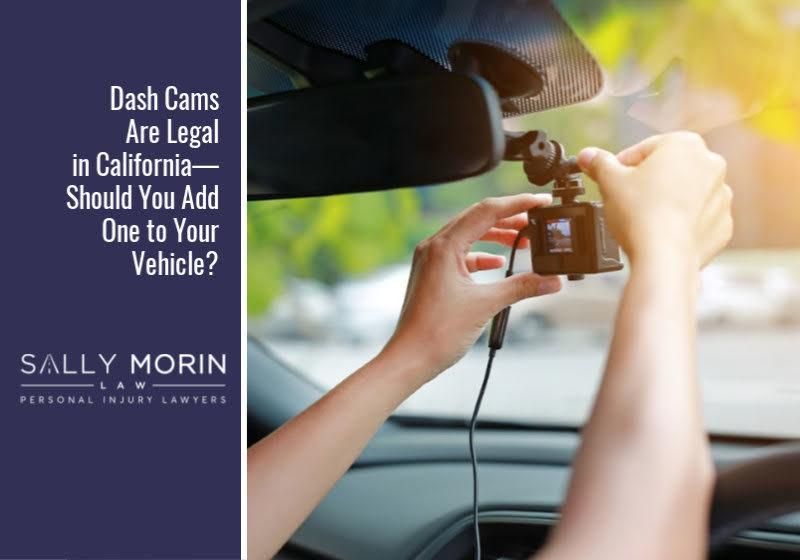
But before you install a dash cam, it’s essential to understand the specific laws and regulations in California. This guide will walk you through the benefits, the legal requirements for installation and use, and how dash cam footage can be a game-changer in a personal injury case.
Reasons to Consider a Dash Camera
While car insurance companies don’t offer discounts if you install a dash cam in your vehicle, there are certainly quite a few benefits to using one. How can you benefit from the use of a dash cam? Here’s what you need to know:
- Have a record of your accident and save yourself from being found at fault in the event of a collision.
- Get out of a ticket if you’re stopped for a traffic violation you didn’t commit.
- Help in the fight against insurance fraud if you witness a collision that was a “crash for cash” situation.
- Monitor your teenage driver’s driving habits.
- Keep an eye on your vehicle whenever it’s unattended.
- Capture other unexpected events or crimes.
Whether you’re concerned about your teen’s speeding habits or their other unsafe driving habits or you’re hoping to protect yourself in the event of a collision that wasn’t your fault, a dash cam really can come in handy to support your best interest. It might be a good idea to install one.
Key Rules for Using a Dash Cam in California
California has specific laws to ensure that dash cams are used safely and don’t obstruct a driver’s view. Here are the key rules you must follow:
-
1. Proper Placement is Crucial
- In a seven-inch square in the lower right-hand corner of the windshield.
- In a five-inch square in the lower left-hand corner of the windshield.
- In a five-inch square in the upper center of the windshield.
- Outside the range of airbag deployment.
California has strict visibility laws. You cannot simply place your dash cam anywhere on your windshield. According to the law, your device must be mounted in one of the following locations:
2. Understand Recording Capabilities
Dash cams record video and often audio on a digital loop. They can also capture data like your speed, direction, and even braking events. In California, a recording can be triggered automatically by a crash or “unusual motion,” or you can start it manually. However, the law states that the device cannot store more than 30 seconds of data before and after the triggering event.
3. Audio Recording Requires Consent
This is a critical point that many drivers overlook. California is a “two-party consent” state, which means you must inform all passengers that they are being recorded. If a passenger does not consent to being recorded, you are legally required to disable the audio recording function of your dash cam. To be fully compliant, it is also recommended to post a visible notice in your vehicle indicating that audio and video recording is in progress.
Can Your Dash Cam Footage Be Used in Court?
If any kind of traffic incident goes to court, who has access to the footage? Can it be used in court?
According to legal experts, either party can use footage recorded via a dash-mounted camera:
“In every jurisdiction across the country—including all federal and state courts—any video or audio recording captured by the cameras likely would be considered discoverable information in litigation and would have to be produced to the complaining party”—James J. Franklin
It’s also important to note that some laws may require you to preserve your dash cam recordings for a certain amount of time following a collision or incident such as a pedestrian accident, or you could be open to legal action if you delete or destroy the dash-cam footage.
What does this mean for you? No matter what happens, you should contact a qualified attorney to advise you on what to do with any recordings from your dash-mounted camera following an accident, especially if you’ve been injured.
At Sally Morin Personal Injury Lawyers, we’re here to protect your best interests, and navigating a personal injury suit involving dash-cam recordings is no different.
We take a unique approach to getting you the assistance you need when you’ve been injured: We’re honest, we care and we advocate only for the seriously injured so you get the help you deserve. Our attorneys never pass you off to a paralegal, inflate claims or push to go to trial to increase our fees. Instead? We’ll put your interests first.
If you’ve been injured in a traffic collision or if you’ve got a question about how your dash camera footage will play into your injuries, we want to help. Contact us today for a free, no-risk online evaluation of your case.
Success Story: $525,000 Settlement for Rear-End Collision Victim
A 34-year-old woman was a passenger in a van when it was struck from behind in a high-speed, rear-end collision in Pittsburg, California. The impact was so severe that she was pinned in the backseat and suffered serious injuries that required weeks in a rehabilitation facility to learn how to walk again.
The team at Sally Morin Personal Injury Lawyers took on her case and fought to get her the compensation she deserved. They secured a $525,000 settlement, with over $321,192 going directly to the client after her medical expenses were paid. This case demonstrates our commitment to achieving life-changing results for the seriously injured.
Source: Sally Morin Personal Injury Lawyers Results Page
What Our Clients Say
We are dedicated to providing our clients with peace of mind and expert legal representation. Here’s what some of our past clients have to say:
“My sister got in a car accident, was hit badly by another driver, became unconscious, and was immediately taken to hospital emergency with an internal brain bleeding thus could not defend herself. As a result, the police report had false information from the other driver and concluded my sister at fault. While other legal firms purposed disappeared after seeing at the police report and other driver’s cheap insurance policy (not easy win), Sally Morin team with great heart and “no win, no pay” written clause took on the case and successfully reversed both insurance + police reports and won the case. My family is grateful to find Sally Morin firm and great team with legal expertise, experience, and most important great heart. Thank you very much.” – James Minh N. Yelp
Read James Minh N.‘s review of Sally Morin Personal Injury Lawyers on Yelp
“I can recommend this firm Sally Morin Lawyers, they help me with my car accident and got a huge settlement claim.” Reddit
Comment
byu/itismyhappyface from discussion
inSacramento
Check out our San Francisco Car Accident Page to learn more about how the process works.
Frequently Asked Questions (FAQ) About Dash Cams and Car Accidents
Q: Can dash cam footage prove who was at fault in an accident?
Yes, it is one of the most effective ways to establish fault. The video can clearly show if a driver ran a red light, made an illegal turn, was speeding, or was otherwise driving negligently. This visual evidence is often more powerful than witness testimony alone.
Q: What if the other driver has a dash cam and I don’t?
If another party has footage of the accident, your attorney can legally request a copy of the recording during the discovery phase of a lawsuit.
Q: Can a police officer take my dash cam after an accident?
A police officer may ask for your dash cam footage as part of their investigation. The footage can be used to help them reconstruct the accident scene and determine what happened.
Q: What should I do with my dash cam footage after a car accident?
First, ensure the footage from the incident is saved and backed up. Do not delete it. Then, contact a personal injury lawyer immediately. They can advise you on how the footage can be used to support your case and will handle all communications with insurance companies on your behalf.
Wondering if You Have a Case?
After an accident, it can be difficult to know what your rights are and whether you are entitled to compensation. To help you get clarity, we offer a simple and free online tool.
Our “Do I Have a Case?” tool can help you quickly determine if you may have a valid personal injury claim. By answering a few simple questions, you can get a better understanding of your legal options.
Do I Have a Personal Injury Case?
This assessment tool provides general guidance only and does not constitute legal advice. Case outcomes depend on many factors not covered in this brief assessment. For accurate evaluation of your specific situation, consult with a qualified personal injury attorney who can review all details of your case.
We Handle Your Car Accident Claim So You Can Focus on Your Life
After an injury, contact the attorneys at Sally Morin Personal Injury Lawyers. We handle many areas of the law, including truck and car accident cases. We believe you should be able to focus on recovering while we handle the legal details.
We truly care about the people of California. Contact us today for a free online case evaluation.


