
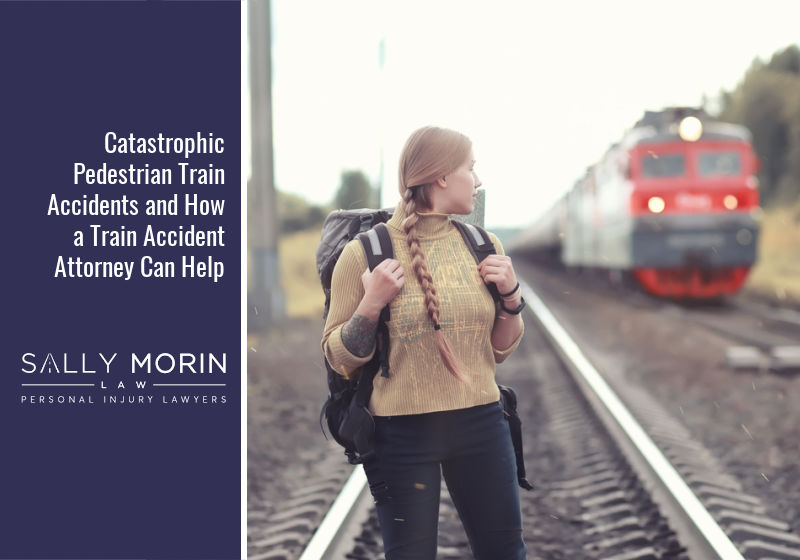
Train accidents might not dominate headlines like car crashes, but they remain a serious threat, especially for pedestrians. These incidents often lead to devastating injuries or fatalities, leaving victims and their families grappling with immense physical, emotional, and financial burdens. If you’ve been involved in a pedestrian train accident, seeking the guidance of an experienced train accident attorney is crucial to protect your rights and pursue the compensation you deserve.
Recent events underscore the ongoing dangers. For instance, in March 2022, a Caltrain accident injured 13 people, including two employees. More recently, Brightline trains in Florida caused fatalities, and Amtrak incidents continue nationwide. In California, a late February accident on the A Line Metro Transit train in Los Angeles resulted in three injuries and two deaths, with the cause still under investigation.
According to the Federal Railroad Administration (FRA), the U.S. saw over 2,000 train accidents in 2022, leading to 273 fatalities and 763 injuries. California ranked second nationally with 171 accidents, 43 deaths, and 38 injuries that year. Updating to more recent data, the FRA reports that highway-rail grade crossing collisions nationwide reached 2,197 in 2023, 2,263 in 2024, and 1,870 in 2025 (through October), with 247 fatalities and 632 injuries in 2025 alone. In California specifically, train accidents remain alarmingly common—second only to Texas historically—with trends showing a slight uptick in highway-rail collisions from 2023 to 2024. While states like Utah also experience notable incidents (over 36 railway events in 2023 alone, resulting in nearly 12 fatalities and 11 injuries), California’s dense urban rail networks, including systems like Caltrain, Metrolink, and Amtrak, contribute to higher volumes. This is why searches for terms like “Utah train accident attorney” highlight similar concerns elsewhere, but in California, the stakes are even higher due to the state’s extensive rail infrastructure.
These statistics reveal that pedestrian train accidents aren’t rare—they’re a persistent risk, often involving vehicles but increasingly pedestrians on tracks or platforms. Understanding the causes, injuries, liabilities, and legal options is essential for recovery.
Common Causes of Pedestrian Train Accidents
Pedestrian train accidents occur more frequently than many realize, often due to a mix of human error, environmental hazards, and systemic failures. While vehicle-train collisions grab attention—like when a driver ignores crossing signals—pedestrian incidents are equally prevalent and preventable.
Here are some detailed common causes:
- Standing Too Close to Platform Edges: Crowded platforms can lead to accidental falls. High winds from passing trains or distractions like phones exacerbate this risk.
- Reckless Behavior on Tracks: Pedestrians might cross tracks illegally, underestimate train speeds (trains can travel over 100 mph and take a mile to stop), or use tracks as shortcuts.
- Slips and Falls Due to Station Hazards: Wet floors, uneven surfaces, debris, or poor maintenance at stations can cause falls onto tracks. Inadequate signage or barriers worsens the issue.
- Train Derailments Affecting Nearby Pedestrians: Derailments, often from track defects or excessive speed, can hurl debris or cause secondary accidents impacting bystanders.
- Lack of Safety Features: Missing platform screen doors, insufficient warning lights, or absent fencing allows easy access to tracks.
- Mechanical Failures: Brake malfunctions, signal errors, or engine issues prevent trains from stopping in time, turning minor encroachments into tragedies.
Additional factors include impaired pedestrians (e.g., under the influence), suicide attempts (though not always accidental), and environmental conditions like fog or ice reducing visibility. Rail companies must comply with FRA and California Public Utilities Commission (CPUC) standards to mitigate these, but lapses occur.
Catastrophic Injuries from Pedestrian Train Accidents
Pedestrian train accidents rarely result in minor injuries due to trains’ massive size and speed. Even a glancing impact can be fatal. While a short fall onto tracks might cause scrapes if escaped quickly, most incidents lead to life-altering harm.
Common catastrophic injuries include:
- Traumatic Brain and Head Injuries: Concussions, skull fractures, or brain bleeds from impacts, often leading to long-term cognitive issues.
- Neck and Spinal Cord Injuries: Whiplash, paralysis, or chronic pain from being struck or thrown.
- Internal Damage: Organ ruptures, internal bleeding, or crush syndrome from compressive forces.
- Crush Injuries and Amputations: Limbs severed by wheels or trapped under trains.
- Severe Lacerations and Fractures: Deep cuts, broken bones, and compound fractures requiring surgeries.
- Burns and Electrocution: From third-rail contact in electrified systems like subways.
These injuries demand extensive medical care, rehabilitation, and adaptive equipment, costing hundreds of thousands. Emotional trauma, like PTSD, adds to the toll. Filing a claim can cover medical bills, lost wages, rehab, and pain and suffering, but proving negligence requires expert legal help from a train accident attorney.
Determining Liability in Pedestrian Train Accidents
Liability in these cases is complex, often involving multiple parties. A thorough investigation by a train accident attorney is key to identifying the at-fault entity.
Potential liable parties:
- The Pedestrian: If acting recklessly (e.g., trespassing), they may bear full responsibility, barring compensation claims.
- Another Individual: Malicious acts like pushing someone onto tracks can lead to criminal charges and civil liability.
- Rail Company or Operator: Responsible for safe premises. Hazards like missing railings, poor lighting, or obstructed paths can make them liable under premises liability laws.
- Maintenance Crews or Contractors: Negligent repairs causing mechanical failures (e.g., faulty brakes) can hold them accountable.
- Government Entities: If public transit like Metrolink is involved, claims against cities or the state follow strict protocols.
In California, comparative negligence allows partial recovery even if you’re somewhat at fault—critical when rail companies blame victims.
Understanding Your Rights: California-Specific Laws for Train Accidents
California’s laws provide a framework for pedestrian train accident claims, but navigating them requires expertise.
- Pure Comparative Negligence: Recover damages reduced by your fault percentage (e.g., 30% fault means 70% recovery).
- Statute of Limitations: Two years for personal injury claims; six months if against a government entity. Act fast!
- Recoverable Damages: Economic (medical costs, lost income) and non-economic (pain, emotional distress).
- CPUC and FRA Regulations: Violations (e.g., safety standards) prove negligence.
- Government Liability: Special filing rules apply for public trains.
Consult a California train accident attorney immediately to preserve evidence and meet deadlines.
What to Do After a Pedestrian Train Accident
To protect your health and legal rights, follow these steps:
- Seek Immediate Medical Attention: Even if injuries seem minor, get evaluated—some manifest later.
- Report the Incident: Notify authorities and rail officials; obtain a police report.
- Document Everything: Photograph the scene, injuries, and hazards; gather witness contacts.
- Avoid Statements: Don’t admit fault or speak to insurance reps without counsel.
- Contact a Train Accident Attorney: They’ll investigate, gather evidence like camera footage, and negotiate.
- File a Claim: Within deadlines, pursue compensation through insurance or court.
- Focus on Recovery: Use any interim support while building your case.
This guide can maximize your claim’s success.
Do You Need a Personal Injury Lawyer?
Identifying if you actually need a personal injury lawyer after a pedestrian train accident can be crucial. Many victims underestimate the complexity of claims against powerful rail companies. Watch this informative video for guidance on when professional help is essential:
How a California Train Accident Attorney Can Help
Proving fault in train accidents is challenging—evidence like black box data or maintenance logs is hard to access. An attorney handles this, building a strong case to counter victim-blaming tactics.
They’ll:
- Investigate thoroughly, securing camera footage, witness statements, and expert analyses.
- Negotiate settlements for full compensation.
- Litigate if needed, especially against government entities.
At Sally Morin Personal Injury Lawyers, we’ve secured high-value outcomes, like this $100,000 pedestrian accident settlement, demonstrating our expertise.
Our Success Stories: Demonstrating Expertise
We’ve helped numerous clients recover after catastrophic accidents. For example, in a recent pedestrian case, we negotiated a $100,000 settlement covering medical and lost wages.
What Our Clients Say
Building trust is key. Here’s what clients say:
“I can’t imagine what I would have done without Sally Morin law. After my accident, I was in the hospital for three weeks in a rehab for three more weeks back in the hospital for another month and then more rehab. During the whole time, Sally Morin helped me figure everything out and I never had to worry about, you know, how I was gonna get my medical bills paid and, you know, who was dealing with insurance companies and all kinds of stuff. I just got to deal with making sure that I was recovering and, uh, at the end of everything, uh, that I was healthy and okay.”
-Kyle B.
Assess Your Case with Our Tool
Wondering if your situation qualifies for a claim? Use our “Do I Have a Case?” tool below to get a quick assessment. Input details about your accident, and it provides a strength score with next steps—remember, it’s for guidance; consult us for personalized advice.
Do I Have a Personal Injury Case?
Risks and Consequences of Not Seeking Legal Help
Delaying or avoiding an attorney can lead to:
- Missed Deadlines: Losing your right to sue.
- Lowball Settlements: Insurers undervalue claims without representation.
- Uncovered Costs: Mounting bills without compensation.
- Prolonged Stress: Handling complexities alone hinders recovery.
Hiring early mitigates these risks.
Train Accident Prevention and Safety Measures
Prevention saves lives. Key strategies:
- Platform Safety: Stay behind yellow lines; report hazards like broken lights.
- Track Safety: Never trespass; use crossings; heed signals.
- Awareness: Educate on train dangers; know schedules.
- Tech Advances: Advocate for detection systems, barriers, and better signage.
- Community Efforts: Join safety campaigns.
Frequently Asked Questions (FAQ)
For more, contact us.
Sally Morin Personal Injury Lawyers: Your California Pedestrian Accident Experts
With years handling California pedestrian and train accidents, we’re committed to securing the settlements you deserve.
Don’t navigate this alone. For a strong CTA: Call 877-380-8852 or get your free case evaluation today. We’re here to help you recover and move forward.


