
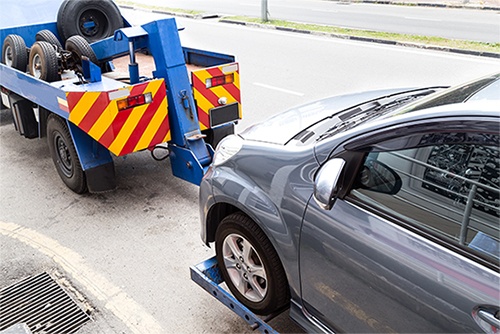
If you’ve been in a traffic accident in California and your motorcycle, car, or bicycle is severely damaged, you may be facing a “total loss” declaration from the insurance company. Dealing with a totaled vehicle can be stressful—especially when you’re also recovering from injuries. Understanding when a vehicle is considered totaled, how insurers calculate its value, and how to fight for a fair payout is crucial to avoiding financial loss.
At Sally Morin Personal Injury Lawyers, we specialize in California traffic accident cases, including property damage claims for totaled vehicles. Whether it’s a motorcycle totaled in a crash or a car or bike destroyed by a negligent driver, we help clients maximize their settlements so they can replace their vehicle and move forward.
Damaged vs. Totaled: What’s the Difference?
Not every accident results in a total loss. A vehicle is damaged if repairs are feasible and cost-effective. In this case, the insurer typically pays for repairs or issues a check for the estimate.
A vehicle is considered totaled (or a total loss) when the cost of repairs exceeds its pre-accident value—known as the Actual Cash Value (ACV). In California, there’s no fixed percentage threshold like in some states; insurers declare a total loss when repairs (plus salvage value) exceed the ACV, making repairs uneconomical.
When Is a Motorcycle Considered Totaled in California?
This is one of the most common questions we hear: when is a motorcycle considered totaled?
Motorcycles are often totaled more quickly than cars because even moderate damage—such as bent forks, frame issues, or cosmetic fairings—can quickly add up. In California, a motorcycle is typically declared a total loss if:
- Repair costs exceed the bike’s ACV.
- There’s structural damage (e.g., bent frame) that compromises safety.
- The insurer determines it’s more cost-effective to pay out than repair.
What makes a motorcycle totaled? Common factors include frame damage, engine issues, extensive cosmetic repairs, or high labor costs for specialized parts.
How Insurance Companies Determine Total Loss Value for Your Vehicle
Insurers calculate ACV using:
- Comparable sales (comps): Similar vehicles (same make, model, year, mileage, condition) recently sold in your area.
- Geographic location: Values are higher in California urban areas.
- Pre-accident condition: Excellent condition with low mileage increases value.
- Depreciation: Vehicles lose value over time.
- Upgrades and customizations: Especially important for motorcycles (e.g., aftermarket exhausts, wheels, or performance mods).
For bicycles, valuation is often based on replacement cost for a comparable new or used bike, including high-end components.
Unique Considerations for Totaled Motorcycles
Motorcycles depreciate quickly but can hold value with custom work. To maximize your motorcycle total loss payout:
- Document all aftermarket parts and upgrades with receipts.
- Highlight low mileage or recent maintenance.
- Provide photos of the bike’s pre-accident condition.
- Research local comps yourself—insurers sometimes undervalue custom or rare bikes.
What If You Still Owe Money on Your Totaled Vehicle?
If your loan balance exceeds the insurance payout, you’re “upside down” on the loan. Options include:
- Use the settlement to pay down the loan (you cover any shortfall).
- Gap insurance: Covers the “gap” between ACV and your remaining loan—highly recommended for motorcycles and financed vehicles.
Without gap coverage, you could owe thousands even after the bike is gone.
How to Dispute a Low Total Loss Settlement Offer
Insurance companies often lowball offers to minimize payouts. If you think your motorcycle totaled settlement is unfair, follow these steps:
- Request the full valuation report — Ask for the insurer’s comps and calculations.
- Gather your own evidence — Find higher-valued comparable vehicles on sites like Cycle Trader, Craigslist, or dealer listings in California.
- Document upgrades and condition — Submit receipts for recent tires, parts, customizations, or maintenance.
- Get an independent appraisal — A professional motorcycle appraiser can provide an unbiased ACV estimate.
- Negotiate firmly — Present your evidence to the adjuster and request a revised offer.
- Escalate if needed — File a complaint with the California Department of Insurance or consult a lawyer.
Many clients see significant increases just by challenging the initial offer.
Total Loss Settlement Timeline in California
The process typically takes:
- 1-5 days: Report the claim and get an inspection.
- 7-14 days: Damage assessment and total loss determination.
- 10-21 days: Receive and negotiate the offer.
- Additional 2-4 weeks: If disputed.
- 3-7 days after agreement: Payment issued.
Delays can occur with complex claims or disputes.
California-Specific Rules for Totaled Vehicles
California law requires insurers to issue a salvage certificate for totaled vehicles. You may:
- Accept the payout and surrender the vehicle.
- Retain the salvage (buy it back for salvage value) and repair it (it will have a salvage title).
For motorcycles and cars, a salvage title reduces resale value significantly. Bicycles don’t require titles.
Tips to Maximize Your Total Loss Settlement
- Act quickly to preserve evidence.
- Don’t accept the first offer.
- Include sales tax, registration fees, and other costs in your demand (California insurers often owe these).
- For motorcycles: Emphasize custom features and local market values.
Real Results: $345,000 Car Accident Settlement
Our team secured a $345,000 settlement for a client in a serious car accident. While this case involved significant injuries, it demonstrates how we handle both bodily injury and property damage claims together for maximum recovery.
What Our Clients Say
“I was involved in a car accident resulting in an arrest, and the whole situation left me shaken and uncertain… Lauren’s expertise and knowledge in the field of personal injury law is striking… Through her resolute approach coupled with an empathetic attitude, she demonstrates that her services are an invaluable part of your legal needs.”
Read Chloe C.'s review of Sally Morin Personal Injury Lawyers on Yelp“Thank you Sally Morin for taking good care of me… Lauren negotiated with the insurance companies while I focused on getting better… You FIERCE ladies helped me get my inner strength back. You are both beautiful and amazing!!!”
Read Vivien A.'s review of Sally Morin Personal Injury Lawyers on YelpSee What Our Free Case Evaluation Is Really Like
Wondering how our free evaluation works? It’s simple, compassionate, and no-pressure. Watch this short video:
Do I Have a Case? Start Here
If you’re dealing with a totaled vehicle and possible injuries, find out quickly if you have a strong claim. Use our free “Do I Have a Case?” tool:
Do I Have a Personal Injury Case?
Frequently Asked Questions (FAQ)
If your motorcycle, car, or bike was totaled in a California accident, don’t settle for less. Contact Sally Morin Personal Injury Lawyers today for a free case evaluation.


