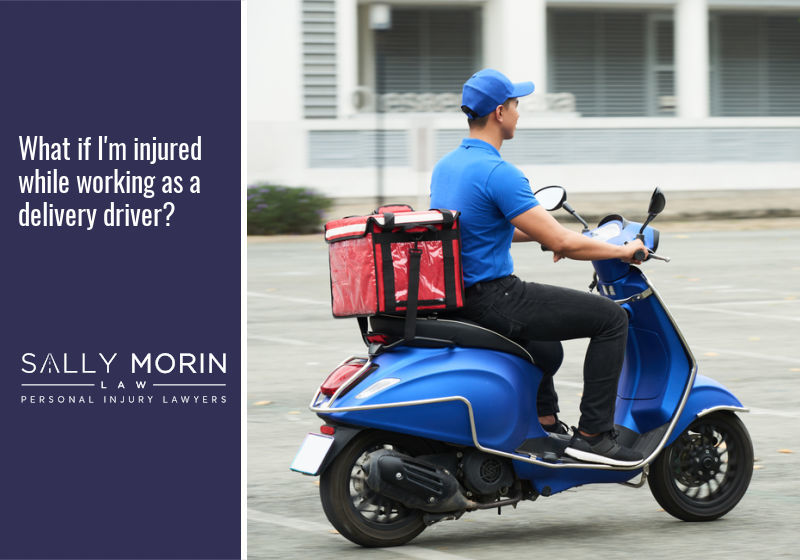
Are you a delivery driver in San Francisco, Los Angeles, or another bustling California city? With an estimated 3.5 million employed delivery drivers and 16 million gig workers nationwide, California alone employs about 36,400 of them. Whether you’re behind the wheel for Uber Eats, GrubHub, DoorDash, Instacart, goPuff, Shipt, Postmates, Amazon, FedEx, UPS, or a local restaurant, furniture store, retail outlet, or other business offering delivery services, the risks are real. Injuries can strike suddenly—perhaps from a collision with another vehicle, a pedestrian, or even workplace hazards—leaving you sidelined for weeks or months, facing mounting medical bills and lost income.
If you’re wondering, “What should I do if I’m injured by a delivery truck?” or “What should I do if I’m hit by a delivery truck?”, this comprehensive guide is for you. We’ll cover immediate steps, insurance intricacies, legal options, and how a dedicated delivery truck lawyer can help you secure the compensation you deserve. Drawing from California’s evolving gig economy laws, including the upheld Proposition 22, we’ll provide actionable insights to protect your rights and recovery.
What Should I Do If I’m Hit by a Delivery Truck?
Being injured while on the job as a delivery driver can be overwhelming, but following a structured approach can strengthen your claim and ensure you receive proper care. Here’s a detailed step-by-step guide tailored to delivery driver accidents in California:
- Prioritize Safety and Health: Stop your vehicle safely if possible, and check yourself and others for injuries. Call 911 immediately for emergency medical assistance. Even if injuries seem minor, seek professional evaluation—adrenaline can mask serious issues like internal bleeding or concussions.
- Document the Scene: If you’re physically able, use your phone to take photos and videos of the accident site, including vehicle positions, damage, road conditions, traffic signs, and any visible injuries. Note the delivery truck’s details (license plate, company name, driver info) and gather witness contact information.
- Report the Incident: Notify your employer or app platform right away using their official reporting system (e.g., online forms for DoorDash or Uber Eats). Provide basic facts like date, time, location, and a brief description, but avoid admitting fault or speculating—consult a lawyer first.
- Seek Medical Treatment: Follow up with doctors for thorough examinations, treatments, and documentation. Keep all records, bills, and prescriptions, as these will be crucial for proving damages in an insurance claim or lawsuit.
- Contact a Delivery Truck Lawyer: Early legal advice is key, especially in complex cases involving commercial vehicles. A specialized attorney can investigate fault, negotiate with insurers, and pursue compensation. In California, firms like Sally Morin Personal Injury Lawyers have a proven track record in these matters.
- File Insurance Claims: Determine applicable coverage (personal, employer, or third-party) and submit claims promptly. Track deadlines, as California has a two-year statute of limitations for personal injury claims.
- Monitor Your Recovery and Expenses: Document lost wages, rehabilitation costs, and emotional impacts. If gig working, note your app status at the time of the injury to align with coverage periods.
By following these steps, you position yourself for the best possible outcome, whether through settlement or litigation.
Dealing With the Aftermath of a Delivery Accident
When an accident occurs, your health comes first—seek emergency care for yourself and others involved, and retain all medical documentation. If feasible, capture photos or videos of the scene, identify witnesses, and collect their contact details.
The next steps hinge on the accident’s specifics: Was a commercial trucker at fault? Did an Uber driver cause the injury? Or was a scooter rider or pedestrian responsible? Your employment status matters too—are you a full-time employee or an independent contractor? Were you on an active delivery?
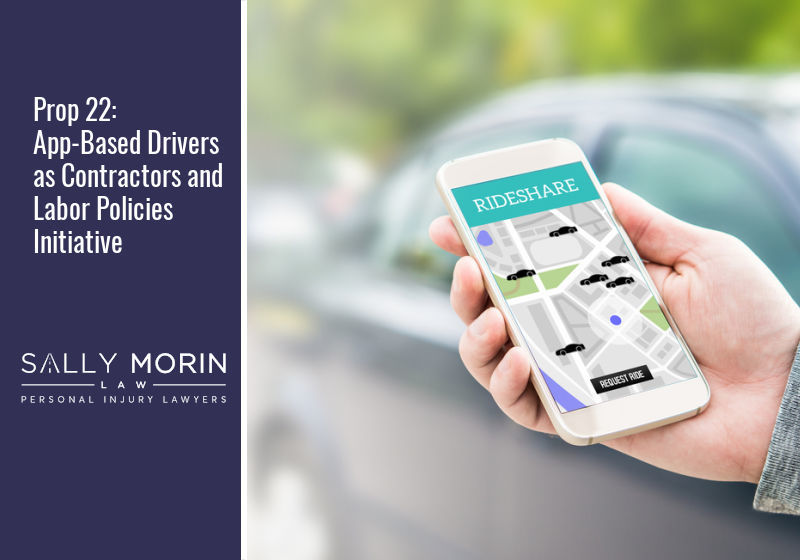
Delivery drivers are often excluded from coverage unless logged into their app and en route. For instance, Uber classifies drivers as independent contractors, limiting company liability. California’s gig work landscape has evolved since the passage of Proposition 22 in November 2020, which was upheld as constitutional by the California Supreme Court in July 2024. This measure keeps app-based drivers as independent contractors while providing benefits like minimum earnings guarantees, health stipends, and occupational accident insurance. Learn more about Prop 22’s implications here.
Recent updates include annual adjustments to per-mile compensation (rising to $0.37 in 2026) and new rights under AB 1340 (effective 2026), allowing drivers to unionize and bargain collectively without losing contractor status. Additionally, qualifying app-based drivers can receive health insurance stipends—up to $579 monthly for 25+ engaged hours per week—through Covered California plans.
Employee vs. Independent Contractor: Insurance Coverage Comparison
Understanding your classification is crucial for accessing benefits. Here’s a comparison table highlighting key differences in California:
| Aspect | Employee (e.g., UPS/FedEx Driver) | Independent Contractor (e.g., Gig Driver) |
| Classification | Hired by company with set hours, benefits | Self-employed, flexible schedule via app |
| Insurance Coverage | Workers’ compensation covers injuries on job; employer liability insurance | Personal auto insurance primary; app-provided coverage only during active periods |
| Benefits | Paid time off, health insurance, unemployment | Prop 22 benefits: earnings floor, health stipends, accident insurance |
| Injury Claims | File workers’ comp claim; no-fault system | May need personal injury lawsuit; prove negligence |
| Taxes & Deductions | Employer handles withholding | Self-report income; deduct business expenses |
| Union Rights | Often unionized with collective bargaining | New AB 1340 allows unionization starting 2026 |
If unsure of your status, consult a delivery truck lawyer to clarify and maximize your entitlements.
Gig Delivery Driver? The Timing Matters
For rideshare or gig delivery drivers, compensation and coverage depend on your app activity phase at the time of injury. California’s Prop 22 reinforces these distinctions while adding protections like health stipends for qualifying drivers enrolled in individual health plans.
- Period 1: Offline or App Off: Personal auto insurance applies, as you’re not working. No app coverage.
- Period 2: Available or Waiting for Request: Limited app-provided liability kicks in if at fault (e.g., Uber: $50,000 per person bodily injury, $100,000 per accident, $25,000 property damage). Third-party coverage may apply if another is liable.
- Period 3: En Route or Active Delivery: Full $1 million liability coverage, plus comprehensive/collision (up to vehicle value, $1,000 deductible). Bodily injury and uninsured motorist protection included.
Track your app logs meticulously, as they prove your period and unlock benefits.
Who Will Pay for My Injuries?
Report your injury to your employer or platform immediately, using online systems for services like GrubHub or DoorDash. Share essentials but withhold details until speaking with a lawyer.
Leverage your health insurance for initial costs like doctor visits, therapy, and meds. For broader recovery, file claims with your employer’s insurer, the at-fault party’s policy, or your own if applicable. California mandates $1 million policies for commercial vehicles with bodily injuries, offering substantial protection.
However, approval isn’t guaranteed—policies vary. Independent contractors might rely on partner insurers like Allstate or Progressive. Claims can cover medical bills, vehicle repairs, lost wages, pain and suffering, and more. If needed, pursue additional compensation via third-party insurance or a personal injury lawsuit.
Don’t accept low offers; fight for full value with professional help.
Our Track Record: Successful Settlements
At Sally Morin Personal Injury Lawyers, we’ve secured significant victories for injured clients, demonstrating our expertise in complex cases. For example, in a scooter vs. taxi accident, we obtained a $4.25 million settlement for a young couple hit by a distracted Yellow Cab driver in San Francisco. The wife suffered catastrophic pelvic, hip, and leg injuries requiring multiple surgeries and over $1 million in medical bills, while her husband endured broken bones and dislocations. Despite Yellow Cab’s bankruptcy filing to evade liability, our team navigated the courts, documented extensive damages (including future surgeries, lost earnings, and diminished quality of life), and negotiated the settlement. This case highlights the risks for vulnerable road users and our commitment to holding negligent parties accountable.
What Our Clients Say
Building trust is key—hear from those we’ve helped:
“So last year I got into a really bad car accident, and my friend recommended me Sally Morin law. Throughout the year, they were super helpful, keeping communication up to date and letting me know what was going on. It was a long process, but they made it really easy for me to handle the situation, and I can’t thank them enough for the things that they did for me throughout the year. So I love them, I will recommend it to my friends, anybody that needs an attorney, I highly recommend Sally Morin law, they are amazing.”
-Anthony D.
Assess Your Case
Wondering if your delivery driver injury warrants legal action? Use our interactive “Do I Have a Case” tool below to evaluate your situation. Answer a few questions about the accident, injuries, and evidence, and get an instant assessment of your claim’s strength. Remember, this is for informational purposes only—contact us for personalized advice.
Do I Have a Personal Injury Case?
Frequently Asked Questions About Delivery Driver Injuries
Experienced a serious Uber Eats or GrubHub delivery driver accident in California? Check out our Uber Accident Page to learn more about how the process works.
3 Signs You Have a Strong Personal Injury Case in California
After an injury as a delivery driver—whether from a collision with another vehicle, a hit-and-run, or workplace hazards—many people ask: “Do I even have a case?” This is one of the most common questions we hear.
In this short video, attorney Sally Morin breaks down the three essential signs that indicate a strong personal injury claim in California:
- Negligence — Proof that the other party (e.g., a distracted driver, negligent trucker, or unsafe road condition) failed to exercise reasonable care. Evidence like police reports, witness statements, dashcam footage, or app logs can establish this.
- Damages — Actual harm suffered, including medical bills, lost wages from time off deliveries, vehicle repairs, pain and suffering, or long-term impacts on your ability to work.
- Causation — A clear link between the negligence and your injuries/damages. Prompt medical treatment strengthens this element—delays can weaken your claim.
Understanding these elements early can help you decide your next steps and avoid lowball insurance offers.
Watch the video below for attorney Sally Morin’s clear explanation and tips:
If these signs sound like your situation, don’t guess—get clarity. Our team specializes in California delivery driver and rideshare accident cases.
Request Full and Fair Compensation for Your Injury—Contact Us Today!
After an injury while making deliveries, don’t suffer in silence or settle for less. You have the right to seek full compensation when negligence causes harm. The team at Sally Morin Personal Injury Lawyers is dedicated to fighting for California’s injured workers, securing millions in settlements.
We handle your personal injury claim so you can focus on your life. We truly care about the people of California. Contact us today for a free online case evaluation.
Don’t wait—schedule your free consultation now and let us guide you toward the recovery you deserve!